
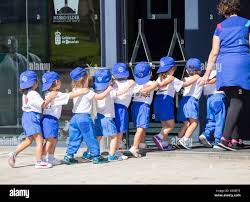
Easy Ways to Design Attractive Childcare Uniforms in Cairns
Many childcare centres in Cairns strive to give young learners a safe and supportive learning space. To achieve this, learners have to feel like they belong to the group, and one of the best ways of assuring them this is by having a proper school uniform. It is not just about children, but teachers can also wear their own uniforms.
A good uniform is not just for good looks with impressive design and colours; it has to carry some sense of belonging and identity with it. Properly designed uniforms make daily activities less stressful for everyone involved.
Best Uniform Ideas for Cairns Childcare Centres
– Choose Soft and Comfortable Fabrics
Young learners are very active and like to move a lot as they play around and enjoy outdoor spaces. To help them do this comfortably, the uniforms should be made from soft and light fabrics that allow easy movements. The most recommended materials include cotton blends and breathable and stretch fabrics. This helps kids to stay active and happy throughout the day.
– Pick Colours That Reflect the Centre’s Identity
When coming up with a uniform for your centre, the colours and design must match those of your centre’s theme and logo. It is not just a matter of settling for colours that you think are impressive, but ensuring that the uniform is made to belong to that particular centre and any other place. In Cairns’ warm climate, bright and warm shades like yellow, blue and green are the most preferred.
– Make Sure the Design Is Simple and Safe
The uniforms should have a simple design with round edges and soft buttons, and other accessories that can make it easy for kids to run around and engage in different activities. Basically, a simple T-shirt and shorts are okay for boys, while a soft dress can do it for girls.
– Add Stretch and Flexibility for Active Play
The uniform has to be flexible to support the child when they engage in different activities like jumping, sitting, lying on the ground, climbing and so on. So you should go for fabrics that can stretch and adjust to different body shapes.
– Include a Logo for Easy Identification
Introducing a logo on the shirt or dress can make it easier for anyone to identify the school that the child is from. This is important, especially during school trips, because a kid may somehow wander too far from the group. It also helps the school to get its identity known everywhere in Cairns.
– Use Durable Materials That Last Longer
As much as we emphasise simple design, the materials used should be long-lasting. Kids usually leave the centre when they are in a total mess because of the activities they have undertaken throughout the day. So the material should be able to withstand frequent washing.
– Add Seasonal Options for Cairns Weather
You need to think about adding seasonal options that can help kids in different seasons. For example, a short-sleeve shirt is okay during hot summer days, while including jackets during cold months can be comforting to kids.
To sum up…
Coming up with an outstanding childcare uniform is not just a matter of selecting bright and warm colours but requires careful consideration of various factors. The uniform should be made to support the child’s daily activity while giving them a sense of belonging. The design should be as simple as possible but still capable of making a first impression out there.
Ready to send your child to daycare? Explore daycare facilities in Cairns now.

Top Features to Look for in Preschool Furniture
When choosing the right furniture for a preschool, it should not just be a matter of filling classrooms with chairs and desks. You need to take time in identifying the specific needs of learners as well as that of the preschool before you can decide on the right furniture.
With the right furniture in classrooms, kids can enjoy learning with comfort. It also guarantees their safety since reliable furniture can barely break or cause injuries. In this article, we will look at important features to check when looking for the right preschool furniture.
Important things to check when finding the right preschool furniture
– Safety first
When looking for reliable preschool furniture, safety should be at the centre of your focus. You need to find desks and chairs that do not pose any kind of harm to the young learners. For example, they should not have sharp edges or unstable legs. Remember that kids can sometimes be naughty and will be doing all sorts of jumping and lying on that furniture. So finding the ones that do not pose any risk to kids will be very important.
– Child-sized design
The furniture should take the shape and style that can fit children and not adults. This means that the tables and chairs must be low enough to be used by children comfortably. When you get the right size of furniture for the kids, they will have an easy time climbing on it and sitting with the right posture. They will also not strain while using tables because they are at the right level. Moreover, low shelves allow kids to reach the books they desire without necessarily asking for adult assistance.
– Durability and strength
This furniture needs to be strong and sturdy in order to support the restless children daily. Choose one made of strong wood or plastic material that will not break after a short period. Remember that investing in durable furniture can seem expensive, but it will turn out economical in the long run since it will require little maintenance and repairs.
– Easy to clean
We all know the nature of young children; they will be forgetting themselves from time to time and deliberately spill food or ink on their desks. So you need to make sure the kind of furniture you get is simple to clean with just mild soap and water. In this regard, try to look for furniture with surfaces that resist stains and liquid spillage.
– Flexibility and mobility
In a preschool, there are many activities that go on, and the layout has to be changed regularly. So getting furniture that is lightweight or with the wheels for easy locomotion can make a big difference. You can also think of opting for stackable chairs and foldable tables if your space is very limited.
– Bright and inviting look
Getting colourful furniture can create an inviting space that will make kids happy and active to carry out different activities.
– Storage solutions
You should also think of purchasing storage solutions like cubbies and bins to keep toys, books and art supplies organised. This also encourages children to be responsible by returning their tools back to the storage unit after use.
Final Thoughts
When choosing durable preschool furniture online, it is important to think about factors like safety, comfort, durability, and flexibility. You also need furniture that is easy to clean and colourful to raise the moods for learning among children.

Palmwood Childcare: What you need to know
If you live or commute to Nambour, find a reliable childcare provider. There are several early learning options close by.
Why does childcare matter?
· High-quality childcare allows parents to work and study while their children are busy at school.
· Children experience routine social time and early learning.
· It makes you feel calm during busy mornings.
Good childcare is not just babysitting, it supports your child’s motor skills and improves their confidence.
Government childcare subsidies to check out
· The Australian childcare subsidy is applicable if you use an approved service.
· How much subsidy you get depends on your income and activity level.
· You have to be a resident of Australia and have fulfilled all immunisations to claim the childcare subsidy.
· Log in to your government account to check your percentage before comparing centres. Small differences in hourly rate can add up over the week.
Picking a reliable childcare
· If you work a nine-to-five job, a long daycare with a full day would be appropriate. It has structured programs for ages 0 to 5.
· Kindergarten-focused preschool education holds sessions rather than full days.
· Occasional care is ideal for short-term cover.
· Family daycare has small group settings and is run by home educators.
· Before selecting A childcare, think about the hours you need and the type of learning you want for your child.
· If you commute, fine supervises near the train line or main roads.
What to look for in a childcare?
· Arrival and pick up time.
· A safe space for your child to play.
· A daily routine and age-appropriate programs.
· Friendly, well-educated staff with low staff turnover.
· Proper communication channels for parents.
Keep the checklist in hand when going on tours, it will help you compare centres fast.
The wait lists are long for preferred sessions and the kindergarten program has to be applied to on time. The fees vary across programs. Childcare subsidy reduces your cost, but check the hourly cap that applies to you.
Enrolment plan for busy parents
· Register at different services, don’t just rely on one centre.
· Keep copies of immunisations and ID ready for fast enrollment.
· Check childcare subsidy details so your booking reflects the right fee structure.
What does a day add childcare look like?
· The Morning Arrival is for free play.
· Group session is next with stories and songs.
· Children are served snacks. They are allowed to rest or go for outdoor play.
· A clear daily rhythm helps your child settle in faster. Inquire about a simple daily program on your tour.
The benefits of early learning at a childcare centre
· Children benefit from going to childcare. They have a consistent social routine with other children their age.
· Exposure to early literacy activities enhances language skills.
· They are taught motor skills suitable for their age.
· Children become independent and learn practical life skills.
Palmwood has several community-run early childhood programs. These small local centres work with families.
Affordable Childcare near Palm Woods
· Look for services with a transparent fee schedule.
· Compare hourly rates. Ask what’s included.
· Check childcare subsidy caps and how much is covered for your income level.
· Travel time matters. If you commute by rail, prioritise centres with drop-off times that match your train schedule.
Explore childcare programs in Palmwoods. Parents who plan ahead find the right local fit faster. Find a program that suits your hours and your child’s needs.

What are the Benefits of Professional Development for Childcare Providers?
Sometime ago, professional development for childcare providers was an option, but today it is a necessity. This is because offering great childcare services requires more than passion. Childcare providers require certain skills, attitudes, and knowledge to be able to handle and offer quality care to children in childcare centres. For this reason, they need to undergo professional development for childcare providers as they continue offering their services. In this article, we will discuss the top benefits of professional development for childcare providers.
Top Benefits of Professional Development for Childcare Providers
Professional development for childcare providers comes with a number of benefits, which include;
- Enhancing the quality of childcare and education
By undergoing professional development for childcare providers, they are able to enhance the standard of care and education they offer to the children under their care. This is because professional development training equips them with the latest teaching strategies, safety practices, and child development research strategies that they require in this field. As a result, they are able to offer care that nurtures the young kids and equips them with important skills they need in their lives.
- Enhances competence and confidence in staff
Another top benefit of professional development for childcare providers is that it helps make childcare providers competent and confident as they work with young kids. Whether they have to deal with kids with challenging behaviours, support kids with special needs or those with different personalities, professional development promotes their confidence and competence. This way, they are able to handle any challenges effectively and calmly, and as a parent, you can be sure that your child will always be in safe and capable hands.
- Enhances communication with families
Strong communication networks with parents and guardians are among the things that enhance the success of a child in a childcare centre. Professional development for childcare providers involves training childcare providers on cultural sensitivity, open and effective communication and conflict resolution. This makes it easy for childcare providers to communicate with all parents about their kids’ progress, concerns, and challenges. As a result, they can work together to provide solutions for your child’s issues, which makes it easy for your child to be successful in the childcare centres.
- Supports individualised learning
Every child has a different development pace and unique needs. With professional development for childcare providers, they are able to appreciate the differences in the needs and development of every child in their childcare centres. As a result, they make sure that they observe, assess and come up with activities that will align with the strengths and needs of every child. This way, the individualised support fosters the emotional, social and academic development of every child in the childcare centres.
- Ensures childcare providers keep up with the latest practices
The early childhood world is always evolving with new strategies, technologies and research emerging every day. Childcare providers need to ensure that they keep up with the new practices at all times. This way, they can know the latest safety regulations, ways of integrating technology in learning and fresh curriculum ideas. Fortunately, professional development for childcare providers keeps them up-to-date with the recent changes, which ensures that kids are taken care of and taught using the up-to-date techniques and strategies.
- Reduces staff turnover
When staff members do not get a chance to grow their careers, they start leaving their jobs. However, with professional development for childcare providers, childcare providers are assured that they are valued and that they have an opportunity for career growth. This results in job satisfaction, which reduces staff turnover rates in childcare centres.
Final Thoughts
If you are a childcare provider, you need to explore professional development childcare workshops. This way, you are going to learn so much about what you need to do in your work and no matter how tough things get, you can always overcome the challenges and offer the kids in your facility the best childcare services possible.
Everything You Need to Know About Family Day Care in Canberra
As more families seek flexible, personalized, and affordable child care options, many are discovering the benefits of family day care canberra. This home-based model of early childhood education is gaining popularity for its small group settings, nurturing environments, and ability to adapt to modern family schedules. Whether you’re returning to work or simply looking for a safe, enriching space for your child, family day care is worth considering.
What Is Family Day Care?
Family day care is a type of child care delivered by qualified educators in their own homes. Unlike large, center-based services, family day care typically involves one educator caring for up to four children under school age. This allows for more personalized attention, consistent routines, and a home-like setting where children can feel safe and supported.
Why Parents in Canberra Are Choosing It
Canberra parents are increasingly drawn to family day care for several key reasons:
- Flexibility: Many educators offer care outside of standard business hours, including evenings and weekends—ideal for shift workers or parents with non-traditional schedules.
- Affordability: Family day care is generally more cost-effective than center-based care and is eligible for the Child Care Subsidy (CCS), making it accessible to many families.
- Continuity of Care: Children often stay with the same educator for several years, which builds trust, emotional security, and strong educator-family relationships.
Educational Standards and Curriculum
Family day care providers in Canberra are required to follow the National Quality Framework (NQF), which ensures high standards across all early childhood services. This includes the Early Years Learning Framework (EYLF), which supports children’s learning through play, exploration, and discovery. Educators are trained to create tailored programs that meet each child’s developmental needs and interests.
What to Look for When Choosing a Provider
When selecting a family day care educator, consider:
- Experience and qualifications
- Clean, safe, and engaging home environment
- References or reviews from other parents
- Clear communication and shared values on child development
Most services also provide orientation visits, allowing you and your child to meet the educator and explore the setting before making a commitment.
Final Thoughts
Family day care in Canberra offers a unique blend of structure, warmth, and adaptability—making it a standout option for many families. With the right educator, children thrive in an environment that feels like home while building the foundations for lifelong learning.
Ask ChatGPT

Belgium Naval & Robotics (BNR) solution for lateral deployment and recovery of drones successfully tested
During industrial tests conducted in Toulon, the solution for rallying, recovering, maintaining and launching surface drones (LARS, Launch and recovery system) developed by Belgium Naval & Robotics, a Naval Group and ECA Group consortium, has demonstrated its relevance and reliability in real conditions.
On Thursday, January, the 13th, 2022, a demonstration of the deployment and recovery operation of the fully remotely operated USV (Unmanned Surface Vehicle) and a presentation of the test results took place in the presence of the Royal Belgian and Dutch navies as part of the rMCM (Replacement Mine Counter Measure) program.
The cooperation between the two companies combines Naval Group’s ability to design a platformintegrated system that enables the safe deployment and recovery of ECA Group’s USV INSPECTOR 125 surface drone.
Result of several years of engineering development, this innovative system deploys laterally on each side of the vessel. This innovation doubles the deployment and recovery capacity.
The industrial tests carried out off Toulon, mobilized up to thirty consortium employees and made it possible to test this innovative technical solution up to sea state 4/5, 40 knots of wind and by day and by night. The analysis and processing of the information collected will enable the solution to be finalized and production of the system to be launched in the second semester of 2022.
Deploying and retrieving robotic drones provides the dual strategic advantage of extending the action capability of ships equipped with the solution, but also of protecting personnel and ships. Thanks to the stand-off solution proposed by Belgium Naval & Robotics (detection, identification and neutralization of mines without human intervention in situ), the Belgian and Dutch naval forces will be able to rely on these drones for mine clearance operations while remaining at a safe distance.
The tests brought together for the first time four subsystems designed by the consortium and allowed them to be tested in real conditions on the VN Rebel, a specially chartered vessel:
- the LARS (Launch and Recovery System): equipped with automated arms that equip the two sides of the ships, it works like an elevator, allowing the launching and recovery of the floating dock that hosts the drones;
- the floating dock: a “cradle” for hosting surface drones (USV). This particularly innovative system makes it possible to limit the swing phenomena by working in a combined and automated way with the kinematics of the gantry combining guide arms, winches and a synchronized system of absorption. The floating dock allows to limit the overall efforts while guaranteeing overall stability. Once lifted on board, the dock allows maintenance and reconfiguration of the USV without having to move it ;
- the security system: allows the drones to be locked in the floating dock. A real asset,securing the drones in their dock limits the need to move them for reconfiguration and maintenance, thus simplifying operations while protecting personnel from the risks inherent in handling.
- the drone: ECA Group’s USV INSPECTOR 125 allows the deployment and recovery of:
- an A-18 underwater drone, carrying the UMISAS synthetic interferometric side scan sonar for mine detection;
- a T-18 towed sonar, carrying the UMISAS synthetic interferometric side scan sonar for mine detection;
- a SEASCAN underwater drone for mine identification;
- a K-STER C underwater drone for mine neutralization;
- an influence mine sweep integrating magnetic, electric and acoustic modules.
Eric Perrot, Director of the rMCM program for Naval Group, said: “We are delighted with the success of these tests of the new surface drone deployment and recovery systems. This performance is the result of the collaboration between multiple partners in this project, first and foremost ECA Group. We have great faith in this technology and we thank the Belgian and Dutch navies for their confidence in us”.
Dominique Giannoni, CEO of ECA Group said: “Today’s demonstration shows the relevance of ECA Group’s drone deployment and recovery solution. It is a constant dialogue between the Naval Group and ECA Group teams that has allowed this great result of integration of our systems. We are fully committed to the success of this highly innovative program”.
The twelve ships (MCMPF) ordered by the Belgian and Dutch navies will be equipped with twentyfour of this innovative and now, proven solution. The first of class rMCM was laid down by NavalGroup in Concarneau the 30th of November 2021.
These mine countermeasures vessels, capable of withstanding underwater explosions and equipped with low acoustic, electrical and magnetic signatures, will be delivered between 2024 and 2030 to Zeebrugge, Belgium. They will be the first dedicated drone carriers in naval history, equipped to operate a fully robotic drone system for mine detection, classification and neutralization.


[Interview] Sébastien Martinot, Commanding Officer of the aircraft carrier Charles de Gaulle
After Naval Group completed the Charles de Gaulle’s technical stop (TS) over the summer of 2021, the aircraft carrier recovered its full potential by the autumn and took part in a unique joint exercise, Polaris 21. Before the ship’s next operational deployment, due in February 2022, its Commanding Officer, Captain Sébastien Martinot, looks back at these stages and discusses the challenges facing the French navy’s flagship in the upcoming maintenance periods.
How did the technical stop of the Charles de Gaulle go?
Sébastien Martinot: Naval Group teams masterfully completed this intense technical stop, all in complete safety despite a tight time frame – the three months of summer – and an ongoing complex health situation.
The remarkable level of availability on completion of the technical stop is all down to Naval Group, the prime contractor, who strongly drew on the lessons learned from previous technical stops, while having well prepared and organised the work closely with state bodies.
Also contributing to this success was the overall synergy between the industrial teams and the crew.
In operational terms, this resulted in the aircraft carrier’s ambitious recovery at the end of the summer. The technical and human testing of installations was completed over a period of two weeks.
What is your view of the aircraft carrier’s operational capabilities, which underwent rigorous tests during the Polaris exercise that took place between 18 November and 3 December?
Sébastien Martinot: After undergoing maintenance, the Charles de Gaulle was fully fit for taking part in this high-intensity engagement training exercise.
Despite difficult weather conditions, the exercise was conducted without any restrictions and with the required reactivity when faced with an evolving scenario. The ship met all operational requirements and the availability of its aviation installations was satisfactory.
Moreover, the crew appreciated the added comfort, atmosphere and space in the cafeteria and crew quarters brought by the work carried out.
The efforts made to complete the work over the summer have indeed proven successful!
What are the challenges of the upcoming maintenance periods?
Sébastien Martinot: The next two major maintenance dates for the aircraft carrier will be the technical stop scheduled for summer 2022 and the Mid-Cycle Docking (MCD) scheduled for 2023. Next summer, as in the summer of 2021, the focus will be on the ship’s aviation installations, machinery hoists and on improving living conditions on board. The aim is to reduce the amount of work to be carried out in the dry dock in 2023, during which time the ship will be benefiting from extensive maintenance work on its propulsion system, nuclear reactors, structures and flight deck.
Anticipating obsolescence and preparing the work carefully must always be a priority in order to ensure that each maintenance period is a success!

First sea trial for the FREMM DA Lorraine, the tenth and last of the multi-mission frigate series
On February 22, 2022, Naval Group started the first sea trials of the FREMM DA Lorraine, an important step before the frigate’s delivery. For several days, the eighth FREMM to be delivered to the French Navy and second with enhanced air defence capabilities (FREMM DA), will undergo sea trials off the coast of Brittany.
First sea trials of the last of the French FREMM series
Ordered by the Organisation for Joint Armament Cooperation (OCCAR), on behalf of the French Procurement Agency (DGA) and the French Navy, the FREMM DA Lorraine is the eighth and last multi-mission frigate to be built for the French Navy. It is also the second FREMM with enhanced air defence capabilities (FREMM DA).
Two hundred and fifty people are mobilized to prepare this first sea trial. This session will enable the performance of the ship’s propulsion and navigation systems to be tested. Several campaigns will then be carried out to test all the systems. FREMM DA Lorraine will then be delivered by the end of the year.
Didier Trehin, Naval Group on-board manager for this first campaign, said: “This first sea trial is a very important moment, especially as this is the last frigate of the FREMM series. This is the first time the ship has been at sea. This milestone also symbolizes three years of preliminary work with our teams and partners. Thanks to exchanges since the beginning of this program in 2005, the FREMM DA Lorraine carries the most recent and efficient technologies on board”.
After being launched in November 2020, the first sea trial of the FREMM DA Lorraine is taking place on schedule and in accordance with the company’s contractual commitment to deliver the ship in 2022. Naval Group teams and partners have been mobilized to meet this milestone despite the Covid crisis.
The FREMM program proceeds according to the schedule established by the last Military Planning Law (LPM). Seven FREMMs have already been delivered to the French Navy between 2012 and 2021. Aquitaine in 2012, Provence in 2015, Languedoc in 2016, Auvergne in April 2017, Bretagne in July 2018, Normandie in July 2019 and Alsace in April 2021. Internationally, the Mohammed VI was delivered to Morocco in 2014 and the Tahya Misr delivered to Egypt in 2015.
FREMM benefited from the program’s feedback, from the start of the construction
With 3,500 hours at sea per year, the FREMMs’ level of availability at sea is unmatched and is an important source of information. The permanent dialogue between the navies, the DGA, the OCCAR, as well as the construction and maintenance teams, enables Naval Group to propose technologies adapted to the evolution of its customers’ operational needs.
As a result of this operational feedback, the FREMM DA Lorraine benefits from the deployment of new functions: enhanced cyber capabilities, deployment of Liaison 22 (NATO’s secure digital radio system), reduced width mast, replacement of the optronic artillery fire control by a radar/optronic fire control, or the integration of a tactical table.
A polyvalent FREMM that has mobilized all the know-how of Naval Group and its industrial partners
Multi-mission frigates, designed and built by Naval Group, are polyvalent, stealthy and highly automated ships capable of responding to all types of air, sea, submarine or land threats.
The operational excellence of FREMMs is recognized worldwide, such as by the US Navy, whose 6th Fleet has awarded the Hook’em Award to four FREMMs for their excellence in anti-submarine warfare two years in a row.
A multi-mission frigate represents four million hours of work, about half of which benefits the supply chain and local actors. The design, construction and maintenance of FREMMs mobilize two hundred and fifty unique skills, some of which are so specific that they require up to eleven years of training (carpenter-sheet metal worker, hull welder, boilermaker, etc.).
The frigate will be based in Toulon alongside the FREMM DA Alsace to provide air defence for major units such as the Charles de Gaulle aircraft carrier or the amphibious helicopter carrier (PHA), as part of a naval or amphibious strike group. The FREMMs with enhanced air capabilities, Alsace and Lorraine, are thus able to carry out the same anti-submarine warfare missions as the other FREMMs in the series, in addition to their enhanced air capabilities.
The FREMM DA also use the most advanced weapons and equipment systems such as the Herakles multifunction radar supplied by Thales, the Aster 15 and 30 and Exocet MM 40 missiles, the MU 90 torpedoes and three additional Combat Management System Setis® consoles in the “central operations”. Like the other FREMMs, the Lorraine will carry the NH90 helicopter (Caiman Marine), whose use is supported by the SAMAHE® system supplied by Naval Group.
Technical specifications of the FREMM DA Lorraine
- Overall length: 142 meters
- Width: 20 meters
- Displacement: 6,000 tons
- Maximum speed: 27 knots
- Manning: 118 people (+ 14 people for the helicopter detachment)
- Accommodation capacity: 165 people
- Range: 6,000 nautical miles at 15 knots
FREMMs with enhanced air defence capabilities (FREMM DA) are capable of deploying:
- 8 Exocet MM40 Block 3 anti-ship missiles
- 32 Aster missiles in Sylver® vertical launch systems
- One 76 mm main gun
- Four 12.7 mm machine guns
- 19 MU90 torpedoes
- One Caiman Marine combat helicopter
- Two Narwhal 20 mm remotely operated guns

